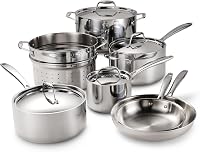
What Is the Best Material for Pots and Pans?
Stainless steel with an aluminum core is a versatile choice for pots and pans if you want cookware for searing, simmering, and regular use. Aluminum heats quickly, while stainless steel provides a durable cooking surface; nonstick and ceramic coatings can help with delicate foods.
On this page (8 sections)
- What is the best material for cookware overall?
- How do stainless steel, aluminum, and clad cookware compare?
- When should you choose hard-anodized aluminum?
- Is ceramic-coated cookware a good choice?
- Which cookware material works best for each cooking task?
- How should you choose cookware material for your stove?
- What should you check before buying cookware?
- Which cookware material should you choose?
Stainless steel with an aluminum core is a versatile material for pots and pans because it pairs a stainless cooking surface with a heat-spreading base. Choose nonstick or ceramic-coated cookware if easy release matters most, and check stove compatibility before buying a set.
The best material for cookware depends on what you cook, how you clean, and which stove you use. No single material handles every job equally well, so a small mix can be more useful than a large set made from one type.
What is the best material for cookware overall?
Stainless steel with an aluminum core is a versatile all-around choice. The stainless surface suits browning and simmering, while an aluminum base helps spread heat.
A single-layer stainless pan and a clad pan are different. Clad cookware bonds layers of metal together, often using aluminum between stainless steel layers; learn what clad cookware means before comparing sets.
An encapsulated aluminum base and full-body cladding are different constructions. Check how the cookware is built if you want to understand how heat spreads across the base and sides.
T-fal's 17-piece set suits cooks who want several pan shapes with a nonstick surface. It works on stovetops except induction.
The Cuisinart set includes 1.5 qt and 2.5 qt saucepans, a 3 qt saucepan with helper handle, an 8 qt stockpot, 8 in and 10 in skillets, and a 7.08 in steamer insert. The aluminum-encapsulated base heats quickly and spreads heat evenly, according to Cuisinart.
How do stainless steel, aluminum, and clad cookware compare?
Aluminum heats quickly, stainless steel offers a durable cooking surface, and clad cookware combines layers. The best fit depends on whether you value quick heating, a bare metal surface, or a combination.
| Material | What it offers | Check before buying |
|---|---|---|
| Stainless steel | Durable cooking surface for many kinds of cooking | Whether it has an aluminum core or base |
| Aluminum | Quick heating and heat distribution | Coating, care needs, and induction compatibility |
| Clad stainless steel | Metal layers combined in one pan | How far the layers extend and which metals are used |
Aluminum is common in cookware because it transfers heat well. Many aluminum pans use a coating or finish, so care needs vary by model.
Stainless steel can suit you if you want cookware without a nonstick cooking surface. For a closer look at its construction and common grades, read what 18/10 stainless steel means.
Clad cookware can use stainless steel inside and outside with aluminum between the layers. Our aluminum versus stainless steel cookware guide explains the tradeoffs in more detail.
Is tri-ply cookware better than a single-layer pan?
Tri-ply construction combines three layers, and its heat distribution depends on the design. The materials and how far the layers extend can vary.
A pan with an aluminum base may heat differently from one with bonded layers across its sides. Look at the construction and the dishes you make before paying more for a particular design.
When should you choose hard-anodized aluminum?
Choose hard-anodized aluminum if you want an aluminum-based set with a nonstick cooking surface. Check stove compatibility and care instructions because they vary by set.
The T-fal set has hard-anodized aluminum construction, a titanium nonstick coating, and a Thermo-Spot heat indicator that turns red when the pan is properly preheated.
The set's coating is designed to help food release and cleanup. T-fal says it suits all stovetops except induction and is oven safe up to 400°F, with lids safe up to 350°F.
Hard-anodized cookware can suit you if you prefer an aluminum-based pan with a nonstick interior. Compare it with stainless steel in hard-anodized versus stainless steel cookware.
Is ceramic-coated cookware a good choice?
Ceramic-coated cookware suits you if you want a nonstick surface with a ceramic coating. The pan's underlying metal, stove compatibility, and care guidance still matter.
The GreenPan x Bobby Flay set includes 1.68 qt and 2.54 qt saucepans, a 5 qt stockpot, 8 in and 10 in frying pans, a 4.52 qt sauté pan with helper handle, a solid turner, a slotted spoon, and a large spatula. It is compatible with gas, electric, and induction cooktops.
GreenPan describes the coating as PFAS-free and diamond-infused. The set combines pots, pans, and utensils in one assortment.
Ceramic coatings are still coatings, so follow the care guidance for your cookware. For a direct comparison of coating types, see ceramic versus nonstick cookware.
Which cookware material works best for each cooking task?
Match the material to the food and cooking method. Stainless steel and clad pans suit varied everyday cooking, while nonstick surfaces can help with foods that tend to stick.
- Sauces and soups: Stainless steel saucepans or a stockpot offer flexible sizes for simmering and boiling.
- Searing and browning: Stainless steel and clad pans suit cooks who want a bare metal surface.
- Eggs and delicate foods: A nonstick surface can make release easier.
- Steaming: Look for a set that includes a steamer insert or a pot designed for steaming.
- Large batches: Check stockpot capacity and whether the set includes a lid.
A set's piece count doesn't tell you whether it has the pan sizes you need. Before buying, compare the included pieces with how many pots and pans you really need.
How should you choose cookware material for your stove?
Start with your cooktop, then compare the cookware's stated compatibility. Induction is especially important to check because not every aluminum or stainless set works with it.
The GreenPan set, HexClad pot set, and Cuisinart set are compatible with induction. The T-fal set excludes induction.
If you have a glass-top electric stove, also consider the pan base. A flat, smooth base is easier to handle on a glass surface; see which pots and pans work on a glass-top stove.
What should you check before buying cookware?
Check materials, construction, included pieces, stove fit, and care instructions. Those details tell you more than a set's material label or piece count alone.
- Cooking surface: Is it bare stainless steel or a nonstick coating?
- Heat-spreading construction: Does the pan have an aluminum base or bonded layers?
- Cooktop compatibility: Does the exact set suit your stove, including induction if needed?
- Useful pieces: Are the saucepan, skillet, and stockpot sizes right for your meals?
- Care: Can you follow the cleaning and utensil guidance for the surface?
If you are still deciding whether a set or individual pieces make more sense, read are cookware sets worth it?. That choice may matter more than selecting one material for every pan.
Which cookware material should you choose?
For an all-purpose set, choose stainless steel with an aluminum core or base. Choose hard-anodized aluminum or ceramic-coated cookware if easy food release and cleanup are higher priorities, and confirm the set works with your stove.
If you want to compare complete collections, start with the best pots and pans sets. For a smaller kitchen, buy only the pieces you use often and add specialty pans later.
Frequently asked questions
What is the best material for pots and pans?
Stainless steel with an aluminum core is a versatile choice for everyday pots and pans because it pairs a durable cooking surface with a heat-spreading core. Nonstick suits delicate foods and easy release, while cast iron and carbon steel suit cooks who want cookware that needs seasoning and care.
Is stainless steel or aluminum better for cookware?
Neither is best for every cook. Aluminum heats quickly and spreads heat well, while stainless steel offers a durable cooking surface that doesn't rely on a nonstick coating.
Clad cookware combines layers, often using aluminum for heat distribution and stainless steel on the cooking surface.
Is ceramic cookware better than nonstick?
Ceramic-coated cookware is a type of nonstick cookware, but its coating differs from traditional nonstick coatings. Compare the specific care instructions, stove compatibility, and coating claims, then choose based on the foods you cook and how you prefer to clean pans.
What cookware material works on induction?
Induction needs cookware that works with a magnetic field, so check the specific set's compatibility before you buy. Some stainless steel, hard-anodized aluminum, and ceramic-coated sets are not induction compatible, while others are.
A material name alone doesn't confirm compatibility.