Are Cookware Sets Worth It or Should You Buy Pieces?
Cookware sets are worth it when most included pieces match how you cook. Buy individual pieces if you already own useful cookware or need only a few specific pots and pans.
On this page (8 sections)
- Are cookware sets worth it for most kitchens?
- When should you buy a cookware set?
- When is buying individual cookware pieces better?
- How do you compare a set's piece count with what you need?
- Does buying a cookware set save money?
- Which material and features should guide your choice?
- What should you check before buying a set?
- So, should you buy a cookware set or individual pieces?
Cookware sets are worth it when most included pieces match how you cook. Buy individual pieces if you already own useful cookware or need only a few specific pots and pans.
A set can simplify shopping by putting several matching pieces together. But the piece count alone doesn't tell you whether the assortment fits your kitchen, meals, stove, or storage space.
Start with the pots and pans you reach for now, then list the cooking jobs you want new cookware to handle. Our guide to how many pots and pans you really need can help you make that list before you compare sets.
Are cookware sets worth it for most kitchens?
A cookware set is worth considering when you need several pieces at once and will use nearly all of them. Buying a set may be simpler than choosing each pan separately, but unused pieces take up space without helping with meals.
Look beyond the number on the box. A set described as 10 pieces might count lids as pieces, so check the actual pots, pans, and lids in the assortment.
List your regular cooking jobs: frying eggs, simmering sauce, boiling pasta, making soup, or cooking several dishes at once. Match each job to a piece you own or plan to buy.
Gaps show where new cookware could help, while duplicates show where a large set could be wasteful.
Think about storage, too. A broad assortment may be hard to fit in a small cabinet, especially if several pieces have long handles or lids that don't stack neatly.
When should you buy a cookware set?
Buy a set when you need several compatible pieces and its selection suits your everyday cooking. This is often practical when furnishing a kitchen from scratch or replacing many worn-out pans at once.
Before choosing, compare the included sizes and types with your list. A set with several pans but no useful stock pot may miss the piece you need most.
Another may include specialty items that would sit unused.
Consider the stove and care instructions. Some sets work with induction, while others don't.
Materials can also differ in cleaning needs and the kinds of cooking they suit; our guide to the best material for pots and pans explains the main tradeoffs.
Who might benefit from a cookware set?
A set may fit a first kitchen, a shared household that wants matching cookware, or a cook replacing several old pieces. If you're furnishing a first apartment, our pots and pans list for a first apartment can help you plan what to buy before choosing an assortment.
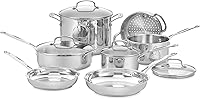
The Calphalon Classic set includes two frying pans, two saucepans, a sauté pan, and a stock pot, with lids for the saucepans, sauté pan, and stock pot. Its stainless steel long handles stay cool on the stovetop, and it works with induction, gas, electric, and glass stovetops.
Choose it if those sizes fit your cooking and you want features such as measuring marks, pour spouts, and straining covers. Skip it if you need only one pan or prefer a different mix of pieces.
When is buying individual cookware pieces better?
Buy individual pieces when you need only one or two items, already own cookware that works, or can't use most of a set. You can choose each size and material for a specific job and avoid adding pieces you don't need.
This approach also lets you replace a single pan without changing the rest of your collection. It can suit cooks who want a stainless steel saucepan and a nonstick frying pan, for example, instead of a full set in one material.
A standalone purchase is still worth checking for practical fit. Confirm that a pan suits your stove, storage space, cooking habits, and care preferences.
If a piece doesn't solve a clear need, wait until you know what your current cookware can't handle.
How do you compare a set's piece count with what you need?
Count usable pots and pans separately from lids, utensils, and other included parts. Then mark each vessel as a needed piece, a useful spare, or a likely duplicate.
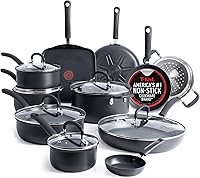
The T-fal Ultimate set includes three saucepans, three frying pans, a griddle, a sauté pan, a Dutch oven, and a steamer. Its 17-piece assortment offers many options, but some households may not use every specialized pan.
The set is hard-anodized aluminum with a nonstick coating and a heat indicator on the frying pans. It doesn't work on induction cooktops, so check your stove before considering it.
If you want fewer pieces, the Tramontina Tempo set contains a 10 in frying pan, 2 qt and 3 qt saucepans with lids, and a 5 qt Dutch oven with lid. That more compact mix may fit cooks who want core stainless steel pots and a pan without a larger assortment.
Its tri-ply base includes an impact-bonded aluminum core, and the set works on all cooktops, including induction. Compare the pieces with your list before buying; a compact set still isn't useful if its sizes don't suit your meals.
Does buying a cookware set save money?
A set saves money only if its useful pieces are worth more to you than its unused extras. Compare the total cost of a set with the cost of the individual pieces you would actually buy, using current prices when you shop.
Don't divide the set cost by the advertised piece count and assume each item has equal value. Lids may count as pieces, and some pans may repeat jobs your existing cookware already handles.
Also consider the cost of filling gaps. If a set lacks your most-used size, you may need to buy another pan anyway.
A set that looks like a deal can become a poor fit once you add replacements for missing pieces.
Which material and features should guide your choice?
Choose cookware material and features to suit your stove, cooking style, and cleanup routine. A set that matches your needs on paper may still be inconvenient if it doesn't work with your cooktop or doesn't include a pan for your usual meals.
Stainless steel can suit browning and searing, while nonstick can be useful for foods that release easily from a coated surface. Sets vary in construction and compatibility, so check those details rather than choosing by piece count alone.
The Farberware Brilliance set includes two frying pans, a 1 qt saucepan, a 3 qt saucepan with lid, a 3 qt sauté pan, and a 6 qt Dutch oven with lid. Its stainless steel pieces have an encapsulated base and work on standard kitchen stovetops.
This set could suit someone who wants a stainless assortment with glass lids and dishwasher-safe cookware. If you need just one replacement pan, a full set may add more cookware than you need.
For a closer look at construction, see what clad cookware means. To compare brands before picking a set, read which cookware brands are worth buying.
What should you check before buying a set?
Check the exact pieces, cooktop compatibility, care needs, storage fit, and gaps in your current cookware. Those details tell you more about value than a large piece count.
Use this short checklist:
- Write down the pots and pans you use each week.
- Note what you need to replace or add.
- Match each item in the set to a cooking task.
- Check whether the set suits your stove and cleanup routine.
- Measure cupboard space if storage is tight.
- Compare the set against buying only the pieces you need.
Our overview of pots and pans sets and what to check covers other details to compare before you decide. If your existing cookware still works, there's no need to replace it just to have matching pieces.
So, should you buy a cookware set or individual pieces?
Choose a set if you need several of its pieces now and have room to store them. Choose individual cookware if you already have useful pans, want a different mix of materials, or need to replace only one or two items.
Use your cooking list to judge the fit. If each included pot or pan has a regular job, a set can make sense.
If several pieces would sit unused, buy the pieces that fill real gaps instead.
Frequently asked questions
Are cookware sets cheaper than buying individual pieces?
A set can cost less per piece, but that only helps if you will use most of them. Count useful pots and pans, compare the set with those pieces bought separately, and account for duplicates you already own.
A lower cost per item is poor value when pieces stay unused.
How many pots and pans do most people need?
The right number depends on how many people you cook for, what you make, and how often you cook more than one dish at once. Start with a frying pan, a saucepan, and a larger pot if those cover your meals.
Add pieces only when a real cooking task calls for them.
Should I buy stainless steel or nonstick cookware?
Choose based on the foods you cook and the care you want to give the pan. Stainless steel suits browning and stovetop-to-oven cooking, while nonstick can make delicate foods and cleanup easier.
A mixed collection lets you use each material where it fits.
Is a 10-piece cookware set really 10 pots and pans?
No. Piece counts often include lids, so a 10-piece set may contain fewer than 10 cooking vessels.
Check the included items one by one, then count how many actual pots and pans match your needs.