Ceramic vs Nonstick Cookware: Which Should You Buy? (November 2026)
For ceramic vs nonstick cookware, choose ceramic if a PFAS-free coating is your priority; choose traditional nonstick for a wider mix of set features. Check each set's stove fit, oven limits, care guidance and included pieces before buying.
On this page (10 sections)
- Ceramic vs nonstick cookware: what is the difference?
- Who should choose ceramic nonstick cookware?
- Who should choose traditional nonstick cookware?
- Which coating gives you easier food release?
- Which cookware works on your stove?
- What oven limit and care routine fit your cooking?
- How do you set up and use a new coated pan?
- How should you choose a set size?
- What common mistakes should you avoid?
- Which should you buy: ceramic or traditional nonstick?
Ceramic vs nonstick cookware comes down to coating preference, stove compatibility and the care you are willing to give the pans. Ceramic sets are the clear choice in this group if a PFAS-free coating is important to you.
Traditional nonstick sets suit cooks who want other coating options and features such as a heat indicator or a larger assortment.
Both styles are designed to make food release easier than it is on an uncoated surface. The right set still depends on your cooktop, oven use, storage space and the pans you reach for most often.
This comparison includes 2 ceramic sets and 2 traditional nonstick sets. If you're deciding whether a set is better than buying individual pans, read our guide to what to check before buying a pots and pans set.


Ceramic vs nonstick cookware: what is the difference?
Ceramic nonstick is one type of nonstick cookware, while traditional nonstick sets can use other coatings. “Nonstick” describes how a cooking surface releases food; it does not identify one specific coating material.
GreenPan describes its coating as diamond-infused and PFAS-free. Calphalon's ceramic coating is made without PFAS, while T-fal describes its coating as titanium-reinforced and Rachael Ray describes its set as enhanced nonstick.
The exact formulation of the Rachael Ray coating isn't specified here.
The distinction matters when the coating itself is part of your buying decision. If you want to compare cookware beyond coated pans, our guide to the best material for pots and pans explains other common options.
Who should choose ceramic nonstick cookware?
Choose ceramic nonstick if a PFAS-free coating is one of your main priorities and the set meets your cooking needs. The GreenPan and Calphalon sets in this comparison are described as PFAS-free or made without PFAS.
Ceramic isn't automatically the right choice for every cook. Skip it if you prefer another coating, if the set lacks a pan you need, or if its cooktop compatibility and care guidance don't match your kitchen.
A material label alone doesn't tell you whether a particular set fits your routine.
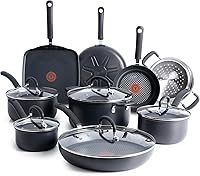
Check the whole set before deciding. GreenPan includes 2 frying pans, a lidded sauté pan, 3 lidded pots and cooking utensils, and it works with induction.
Calphalon includes 3 frying pans, 2 saucepans and a Dutch oven, with a stated oven limit of 450°F.
For more options in this category, see our guide to the best GreenPan cookware sets. If you don't need a full set, compare its pieces with the pans you already own.
Who should choose traditional nonstick cookware?
Choose traditional nonstick if you want to compare coating options and useful features like a heat indicator or a large assortment. T-fal and Rachael Ray offer two different traditional nonstick sets here, and neither is compatible with induction.
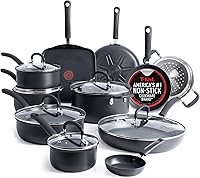
T-fal is the pick for a cook who needs many pieces, including a griddle, steamer and egg pan. Its heat indicator turns red when the pan is properly preheated.
That makes the preheating cue part of the set's appeal, but the size is a drawback if storage is tight or you only use a few pans.
Rachael Ray suits someone who wants a colorful exterior, silicone-grip handles and two included utensils. Skip both sets if you cook on induction.
For T-fal, hand washing is the care instruction, so it also doesn't fit someone who wants to put every pan in the dishwasher.
A hard-anodized nonstick set is another option to consider if you are comparing traditional coatings. See our guide to the best hard-anodized pots and pans sets before choosing a full assortment.
Which coating gives you easier food release?
Both ceramic and traditional nonstick are designed to release food, but the coating and your cooking habits affect the result. Don't assume that a pan will release every food without the right heat and handling.
GreenPan describes its diamond-infused ceramic surface as offering food release. Calphalon describes its ceramic surface as nonstick and quick to clean.
T-fal's coating is titanium-reinforced, and Rachael Ray describes its interior as enhanced nonstick.
For either type, follow the care guidance for the set you buy. Avoid overheating a coated pan or scraping it with a utensil that its instructions don't allow.
If food begins sticking, review our advice on how to make nonstick pans last longer.
Can you use metal utensils on ceramic and nonstick pans?
Use metal utensils only when the manufacturer says they are suitable for that exact pan. Calphalon describes its ceramic interiors as metal-utensil safe, but that guidance isn't stated for the other sets here.
For pans without that specific guidance, choose a utensil that won't scrape the coating. Our guide to using metal utensils on nonstick pans explains what to check.
Which cookware works on your stove?
Confirm cooktop compatibility before comparing coatings, especially if you have induction. A coating type by itself doesn't show whether the cookware will work on your stove.
GreenPan works with gas, electric and induction cooktops. Calphalon is described as compatible with induction, electric, glass and gas.
T-fal and Rachael Ray exclude induction, which rules them out for kitchens with that cooktop.
If you have a glass-top stove, handle pans with care and check the cookware guidance for your cooktop. Our guide to pots and pans for a glass-top stove covers what to consider.
What oven limit and care routine fit your cooking?
Choose a set whose pan and lid limits cover the way you finish meals, and follow its cleaning instructions. Oven limits differ across these sets, so don't use the highest limit from one brand as a rule for another.
Calphalon states an oven limit of 450°F for its cookware and tempered glass lids. Rachael Ray's set is oven safe to 400°F.
T-fal's pans can handle up to 400°F, while its lids are rated to 350°F. GreenPan's product description states 392°F for its pans, but doesn't specify a lid limit.
Care instructions also affect the choice. T-fal says to hand wash its set.
Calphalon recommends hand washing despite describing the cookware as dishwasher safe, so hand washing is the practical routine to plan for. Don't infer care guidance for GreenPan or Rachael Ray from another brand's instructions.
A common mistake is to treat a pan and its lid as having the same oven limit. Check both before putting a covered dish in the oven, and use the lower limit when the cookware is being used together.
How do you set up and use a new coated pan?
Start by reading the set's care guidance, washing the cookware as directed, and matching the pan to the burner. A calm start helps you avoid scratches, uneven heating and a pan that's too large for the cooking task.
Use a burner that suits the pan's base, and keep the heat within the manufacturer's guidance. Let the pan warm before adding food, but don't leave an empty coated pan heating unattended.
T-fal includes a heat indicator to show when its pan is properly preheated; the other sets here don't list that feature.
Choose utensils that match the coating instructions, and use enough room to turn food without scraping the surface against other cookware. When cooking is done, let the pan cool before cleaning it.
Sudden temperature changes and rough stacking can be hard on cookware.
Store pans so their cooking surfaces don't rub against each other. If you stack them, use a protective layer between pieces rather than letting one coated surface rest directly on another.
How should you choose a set size?
Choose a set based on the pans you use each week, not the piece count on the box. Count the frying pans, saucepans and larger pots you need, then check whether those sizes are included.
T-fal offers the broadest assortment here at 17 pieces. That may suit a household that uses a griddle and steamer, but it's a poor fit if cupboards are already crowded or you don't need the extra pieces.
GreenPan and Calphalon each cover several common tasks with 13- and 12-piece sets, while Rachael Ray includes 12 pieces and 2 utensils.
A set can look like better value and still leave you reaching for a missing pan. Our guide on how many pots and pans you need can help you make an inventory first.
You can also compare the best pots and pans sets once you know which pieces matter.
T-fal suits a cook who wants a wide selection of pieces and a visible preheating cue. It includes 3 saucepans, 3 frying pans, a griddle, a Dutch oven, a sauté pan, a steamer and an egg pan.
Skip it if you use an induction cooktop or don't want to hand wash.
Rachael Ray Cucina fits a cook who wants colorful cookware for a gas, electric or glass-ceramic stove. Its hard-enamel porcelain exterior and included slotted turner and spoon give it a different look and setup from the ceramic sets.
GreenPan x Bobby Flay is the ceramic choice here for an induction kitchen. It includes 3 lidded pots, 2 frying pans, a sauté pan with helper handle and 3 utensils.
Calphalon suits cooks who want a ceramic set with 3 frying pans in different sizes and a higher stated oven limit. Its set includes 2 saucepans and a Dutch oven, and the brand describes its interiors as metal-utensil safe.
What common mistakes should you avoid?
The biggest mistakes are buying before checking cooktop fit, assuming every ceramic coating is PFAS-free and ignoring care instructions. These checks take little time and can rule out a set that won't work in your kitchen.
Don't buy T-fal or Rachael Ray for an induction cooktop. Don't choose a set just for its piece count if you don't have space or won't use the extras.
And don't assume that oven-safe cookware means every lid has the same temperature limit as its pan.
Another mistake is treating all nonstick cookware as if it has one care routine. Check whether your exact set allows metal utensils, what cleaning method it recommends and what oven limits apply.
When those details don't match your habits, pick a different set or consider buying only the pans you need.
Which should you buy: ceramic or traditional nonstick?
For ceramic vs nonstick cookware, choose ceramic when a PFAS-free coating and your stove fit the set; choose traditional nonstick when its specific features and assortment better match your cooking. GreenPan and Calphalon are the induction-compatible options in this group, while T-fal and Rachael Ray suit non-induction kitchens.
Pick Calphalon if you want the highest stated oven limit here. Pick T-fal if you want 17 pieces and a preheating indicator, and can hand wash the cookware.
Choose GreenPan for ceramic and induction, or Rachael Ray if its colorful exterior and utensils fit your kitchen.
Before you buy, compare the included pans with your weekly meals, confirm the stove and oven limits, and plan for the care routine. If you're still weighing materials, use our guide to the best material for pots and pans to compare coated cookware with other options.
Frequently asked questions
Is ceramic cookware better than regular nonstick?
Ceramic cookware suits you if a PFAS-free coating is a priority and the set fits your stove. Traditional nonstick gives you other coating options and sets with features such as a heat indicator or a larger assortment.
Compare the care instructions, oven limits and pieces included before deciding.
Does ceramic nonstick cookware contain PFAS?
The GreenPan and Calphalon ceramic sets here are described as PFAS-free or made without PFAS. Ceramic cookware varies by product, so check the coating information for any set you consider rather than assuming every ceramic-coated pan has the same formulation.
Can you use metal utensils on ceramic cookware?
Follow the care guidance for the exact pan. Calphalon describes its ceramic interiors as metal-utensil safe, but that feature is not stated for the other sets here.
Use utensils that match the maker's instructions, and see our guide to using metal utensils on nonstick pans for more advice.
Which cookware works on an induction stove?
GreenPan and Calphalon are compatible with induction among these 4 sets. T-fal and Rachael Ray exclude induction, so they won't suit that cooktop.
Check compatibility for the exact cookware you plan to buy, since a coating type by itself doesn't confirm induction use.
How can you make nonstick pans last longer?
Follow the heat, utensil and cleaning instructions for your cookware, and avoid rough handling that can damage its coating. Ceramic and traditional nonstick pans both need care suited to their specific materials.
Our guide to making nonstick pans last longer covers practical habits.