Aluminum vs Stainless Steel Cookware Sets: Which Is Better? (November 2026)
Choose coated aluminum for easy food release, or stainless steel for an uncoated surface suited to browning. Many stainless sets use aluminum in the base or layers to spread heat.
On this page (6 sections)
Choose coated aluminum for easy food release, or stainless steel for an uncoated surface suited to browning. Many stainless sets also use aluminum in the base or layers to spread heat, so aluminum vs stainless steel cookware is not always a choice between pans made of only one metal.
Aluminum pans can be responsive to heat. Stainless steel offers an uncoated surface for browning, while layered construction can add aluminum to spread heat through the pan.
 Best for easy-release cooking
T-fal Ultimate Hard Anodized 17-Piece Set
 Best for fully clad construction
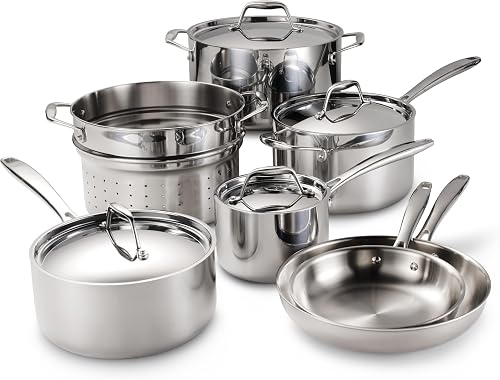
Tramontina Signature Tri-Ply Clad 11-Piece Set
Aluminum vs stainless steel cookware: what is the difference?
Aluminum cookware can have a nonstick coating, while stainless steel provides an uncoated cooking surface. The way a set is built matters as much as its main material.
Some aluminum cookware has a nonstick coating. That can help food release and make cleanup easier, but the coating and care instructions matter.
Stainless steel cookware may use a thick aluminum base or a core that runs through the base and sides. Our guide to what clad cookware means explains the difference between base-only and fully clad construction.
How does aluminum cookware heat?
Aluminum cookware can respond quickly when you raise or lower the burner. That may suit everyday cooking when you want a pan to heat without a long wait.
A hard-anodized aluminum set may have a coated cooking surface. The T-fal Ultimate Hard Anodized set has a titanium nonstick coating and a Thermo-Spot indicator that turns red when the pan is properly preheated.
T-fal says this set is hand wash only and works on all stovetops except induction.
How does stainless steel cookware heat?
Stainless steel alone is not the whole story. An aluminum base or core helps spread heat, while stainless steel remains the cooking surface.
The Tramontina Signature Tri-Ply Clad set has an aluminum core throughout the pans. It includes 2 fry pans, 3 covered saucepans, a covered stock pot and a pasta strainer insert.
For heat spread beyond the pan base, a fully clad design is worth comparing. The best tri-ply stainless steel cookware sets guide can help you compare that style.
Which material is better for browning and searing?
Stainless steel is a strong fit for browning and searing because it gives food an uncoated metal surface. The pan still needs proper preheating and cooking technique.
Food can stick to stainless steel if the pan is too cool, too hot or crowded. Use moderate heat and allow food to release as it browns rather than pulling it from the pan too early.
An aluminum pan can brown food too, but a nonstick-coated version is designed for easy release. For a coated fry pan, follow the set's heat and utensil guidance.
The Tramontina set has stainless steel cooking surfaces and an aluminum core throughout the pans. Tramontina's instructions recommend medium or medium-low heat for many tasks.
Read what 18/10 stainless steel means if you see that label while comparing stainless cookware. Steel grade and pan construction answer different questions.
Which cookware is easier to clean?
A nonstick-coated aluminum pan can release food more easily, while stainless steel may need more careful cooking and cleanup. Cleaning rules depend on the specific set.
T-fal's care instructions call for hand washing. Follow the care instructions for the exact set you buy.
Calphalon says its stainless set is dishwasher safe. Farberware's stainless pieces are dishwasher safe, but its nonstick fry pans are excluded and hand washing is recommended for them.
Stainless steel can develop stuck-on food after searing. Let the pan cool, soak it if needed, and use a cleaner suitable for the finish.
Which cookware works on induction?
Check each set's compatibility before choosing by material. The T-fal aluminum set here excludes induction, while the Calphalon and Tramontina stainless sets work on induction.
Plain aluminum cookware needs a compatible magnetic base to work on an induction cooktop. Stainless steel sets vary too, so check the specific set's compatibility.
If you cook on a glass-top stove, also consider the base shape and weight. Our guide to pots and pans for a glass-top stove covers fit and handling.
Which set fits your cooking habits?
Pick coated aluminum for easy-release meals, stainless with an aluminum base for everyday versatility, or fully clad stainless for layered construction through the pan. Think about the meals you cook most and which care routine you'll keep up with.
The T-fal set offers 17 pieces, including a griddle, steamer and several fry pans. Its nonstick surface and heat indicator show when pans are properly preheated.
The Tramontina set includes 11 pieces, a pasta strainer insert and tri-ply clad construction. It works on induction and is oven safe up to 500°F.
The Calphalon set has a stainless surface and bonded aluminum base. It works on induction and is oven safe up to 450°F.
The Farberware Classic set combines stainless pots with aluminum-core bases and 2 nonstick fry pans. It includes an 8-quart stockpot and 3 nylon tools, and is oven safe to 350°F.
Before deciding, consider how many pans you actually use. This guide to choosing a pots and pans set can help you check the piece mix, storage needs and cooktop fit.
Is aluminum or stainless steel cookware right for you?
Choose coated aluminum when easy food release matters most; choose stainless when you want an uncoated surface for browning and searing. If you want both, compare stainless sets with aluminum bases or fully clad cores.
For induction, confirm the exact set supports your cooktop. For a coated set, check care instructions and oven limits; for stainless, decide whether a bonded base or full cladding suits your cooking.
If you're still weighing other metals and coatings, our guide to the best material for pots and pans compares the options. Pick the construction that fits your meals, stove and cleanup habits.
Frequently asked questions
Is aluminum or stainless steel better for cookware?
Coated aluminum suits cooks who want easy food release. Stainless steel suits browning and an uncoated cooking surface.
Many stainless pans use an aluminum base or core to spread heat, so compare construction as well as the material named for the set.
Does stainless steel cookware contain aluminum?
Some stainless cookware uses aluminum beneath or between stainless layers to spread heat. A bonded base keeps that layer at the bottom, while fully clad cookware carries the layers through the pan walls.
Check the construction details for the exact set.
Can aluminum cookware work on induction?
Plain aluminum cookware generally needs a magnetic layer or base to work on induction. The T-fal set here excludes induction, while the Calphalon and Tramontina stainless sets are compatible with it.
Confirm compatibility for the exact set and your cooktop.
Which cookware material is easier to clean?
A nonstick-coated aluminum pan can release food easily, while uncoated stainless steel may need more attention to preheating and cooking fat. Care varies by set: T-fal calls for hand washing, while Calphalon is dishwasher safe.
Follow each set's care instructions.
Is clad cookware the same as stainless steel?
Clad cookware describes layers of different metals joined together. A stainless clad pan often has stainless steel cooking surfaces and an aluminum core for heat spread.
The layers may cover only the base or extend through the pan walls, so check whether it is fully clad.