How Many Pots and Pans Do You Need?
Most home cooks need 5 to 7 useful pots and pans: start with a frying pan, two saucepans, and a large pot, then add a second frying pan or sauté pan if you often cook several dishes at once. Choose based on your meals, household portions, stove, and storage space.
On this page (8 sections)
- How many pots and pans do you need for everyday cooking?
- Which pots and pans fit your cooking habits?
- Which piece should you add next?
- Is a cookware set too much for your kitchen?
- How do these cookware sets fit different kitchens?
- How should you choose between a set and individual pieces?
- How can you tell if you have too many pots and pans?
- How many pots and pans should you buy?
How many pots and pans do you need? Most home cooks need 5 to 7 useful pieces: a frying pan, two saucepans, and a large pot, with an extra frying pan or sauté pan if you often cook several dishes at once.
Choose by what you cook, how many people you feed, and how much room you have.
Start with cookware that handles your regular meals. Add pieces when you notice a repeated gap, such as waiting to reuse a pan or running short on space for a larger batch.
How many pots and pans do you need for everyday cooking?
Four core pieces cover many everyday meals: a frying pan, a medium saucepan, a larger saucepan, and a large pot. A fifth or sixth piece helps when you cook multiple dishes at once.
Use the frying pan for eggs, vegetables, and quick meals. A medium saucepan suits grains, sauces, and smaller portions, while a larger one gives you room for pasta or a bigger batch of soup.
Choose a stock pot or Dutch oven for larger batches and simmering. You may not need both at first if one large pot covers the meals you make.
For a more flexible setup, add a second frying pan or a sauté pan. A second frying pan suits cooks who make separate skillet dishes; a sauté pan gives you more room to stir ingredients for a one-pan meal.
Which pots and pans fit your cooking habits?
Choose pieces for the meals you make most often. Your weekly routine is a more useful guide than a set's total piece count.
- Quick breakfasts: Start with a frying pan and small saucepan.
- Pasta and grains: Keep a large pot and medium saucepan.
- One-pan dinners: Add a sauté pan with space to stir.
- Batch cooking: Choose a larger pot and a second pan for parallel cooking.
- Small portions: Favor compact pans that fit your burners and storage.
If you cook for more people, consider the portions you usually serve. A large pot can help with family meals, but it takes more cabinet space and can be awkward to handle when full.
The pots and pans guide for a first apartment covers a starter setup for a new kitchen. If you already own cookware, count the useful pieces you reach for before adding anything.
How many pots and pans do you need for one person?
One person can often start with 3 or 4 pieces: a frying pan, medium saucepan, and a small or large pot, depending on what you cook. Add a second pan if you prepare several parts of a meal at once.
A smaller setup saves cabinet space and reduces washing. Choose pieces that can handle more than one job, such as a saucepan for sauces and grains.
How many pots and pans do you need for a family?
A household that cooks several dishes at once may prefer 6 or 7 pieces. Two frying pans, two saucepans, and a large pot cover many routines, with a sauté pan as an optional extra.
Think about meals as well as household size. A family that often makes one-pot dinners may use a large pot more than a second frying pan, while a household that cooks sides separately may want both.
Which piece should you add next?
Add the pan that solves a repeated problem. If you often wait for a burner, cook overlapping dishes, or run short on capacity, that points to the piece you need next.
A second frying pan is useful when you cook breakfast or dinner for more than one person. A sauté pan may be a better fit for stovetop meals that need more room for stirring.
A Dutch oven makes sense if you regularly simmer stews or cook larger batches. Skip it if you have little storage and rarely make those meals.
Material affects how a pan cooks and what care it needs. Compare the tradeoffs in our guide to the best material for pots and pans before choosing your core pieces.
Is a cookware set too much for your kitchen?
A set is practical when most of its pieces match your routine. Check the pans, pot sizes, and lids inside it before deciding whether the assortment earns its space.
Some sets count lids toward the total piece count. You may also find shapes you already own or are unlikely to use, so compare the contents with the jobs you want covered.
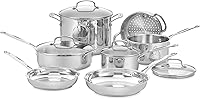
The Calphalon Classic set includes 8 in and 10 in frying pans, covered 1.5 qt and 2.5 qt saucepans, a covered 3 qt sauté pan, and a covered 6 qt stock pot. Its measuring marks, pour spouts, and straining covers may help if you use those features regularly.
It works with induction, gas, electric, and glass stovetops, and is oven-safe up to 450°F. Choose it if you need a broad mix of sizes and have room to store them; skip it if you only need a few basics.
Our guide to pots and pans sets explains what to check inside a bundle. For help choosing between a set and separate pieces, read whether cookware sets are worth it.
How do these cookware sets fit different kitchens?
Compare the actual cooking vessels, not just the piece count. These four sets offer different mixes, from a focused group of pans to broader collections.
The Tramontina Tempo set includes a 10 in frying pan, 2 qt and 3 qt saucepans with lids, and a 5 qt Dutch oven with lid. It suits someone who wants one skillet and covered pots for sauces, grains, or larger meals.
Its tri-ply base has an impact-bonded aluminum core, and the set is oven-safe up to 350°F. Skip it if you regularly need two frying pans at once, since it includes just one.
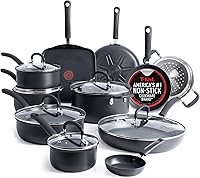
The Calphalon Classic Hard-Anodized set includes 8 in and 10 in frying pans, a 12 in all-purpose pan with lid, and a 3.5 qt saucepan with lid. It suits cooks who want nonstick surfaces and a covered pan for larger skillet meals.
Calphalon says its AquaShield nonstick technology keeps the cookware performing like new 40 percent longer than the previous generation of Calphalon Classic. It is oven-safe up to 450°F and dishwasher-safe.
The Farberware Brilliance set includes a 1 qt saucepan, a 3 qt saucepan with lid, a 6 qt Dutch oven with lid, a 3 qt sauté pan, and 8.25 in and 10 in frying pans. It suits households that want multiple shapes for separate tasks.
Its fully encapsulated base supports even heating, and the set is oven-safe up to 350°F. Skip this assortment if cabinet space is tight or you need only a few core pieces.
How should you choose between a set and individual pieces?
Buy a set if its main vessels match the way you cook. Choose individual pieces if you already own the essentials or need a specific size the set doesn't include.
Before buying a set, write down the pieces you use every week. Compare that list with the set's contents, including which items are lids and whether they count toward the total.
For separate purchases, fill the biggest gap first. Add a second pan if you often cook multiple dishes at once; choose a larger pot if you regularly run out of room.
Check stove compatibility and care instructions before you buy. If you cook on a glass top, see which pots and pans work on a glass top stove.
How can you tell if you have too many pots and pans?
You may have more cookware than you need if several pieces do the same job and stay unused. Start with the pans you use in a typical week, then decide whether the others earn their storage space.
Keep a second pan if you use it to cook another dish at the same time. If a specialty pot comes out only once a year, consider buying it later or borrowing one when needed.
Measure your cabinet or drawer space before replacing a small collection with a large set. Handles and lids need room too, even when pans stack.
How many pots and pans should you buy?
For how many pots and pans you need, start with 4 core pieces and add 1 or 2 only when your meals call for them. A frying pan, two saucepans, and a large pot cover a wide range of home cooking.
Pick a larger set if you need most of its pieces and have room to store them. Choose individual cookware if you already own the basics or want to build around a few specific tasks.
Frequently asked questions
How many pots and pans does a beginner need?
A beginner can start with 4 or 5 pieces: a frying pan, a medium saucepan, a larger saucepan or small pot, and a large pot for pasta or soup. Add another pan when you regularly cook two dishes at once.
A small kitchen may favor fewer, versatile pieces over a large set.
What pots and pans do I need for a family?
A family that cooks at home most days may want 6 or 7 pieces, including two frying pans, two saucepans, and a large pot. Add a sauté pan if you often cook one-pan meals.
Match pot capacity to the portions you make, and check that your stove and cabinets can handle the pieces.
Is a 10-piece cookware set too much?
A 10-piece set may be useful if its pieces match your cooking habits and storage space. Piece counts often include lids, so compare the actual pots and pans in each set.
If several shapes duplicate jobs you rarely do, a smaller set or individual pieces may serve you better.
Should I buy cookware pieces separately?
Buy pieces separately if you already own useful cookware, need specific sizes, or want to spread out the cost. A set can make sense when you are starting from scratch and its included pans cover your routine.
Compare the pieces inside each set before treating the total piece count as value.