Can You Use Metal Utensils on Nonstick Pans?
Usually, avoid metal utensils on nonstick pans because a sharp edge or scraping motion can damage the cooking surface. Use wood, silicone, or nylon unless your pan maker says metal tools are safe for that specific pan.
On this page (6 sections)
- Can you use metal utensils on nonstick pans?
- What utensils are gentler on nonstick pans?
- What if your nonstick pan is labeled metal utensil-safe?
- Can you use metal utensils on hard-anodized nonstick pans?
- What should you do if a nonstick pan is scratched?
- How can you choose a pan that fits your utensil habits?
Usually, don't use metal utensils on nonstick pans because a sharp edge or forceful scrape can damage the cooking surface. Wood, silicone, and nylon are gentler choices unless the instructions for your exact pan say metal tools are safe.
The key is the pan's construction, not just the word “nonstick.” Some designs allow metal tools, while many coated pans call for softer utensils to help protect the surface.
Can you use metal utensils on nonstick pans?
Only use metal utensils when the pan maker specifically says they're safe for that model. Otherwise, choose a softer tool and avoid scraping the pan with a knife, fork, or metal spatula.
A coating may look smooth but still be vulnerable to scratches or chips. A tool's edge, pressure, and repeated contact can all matter.
If you're unsure, check the care instructions that came with the pan. A general claim about a brand or cookware type may not apply to every pan in its range.
Can you use metal utensils on ceramic nonstick pans?
Don't assume ceramic nonstick is safe for metal utensils. Ceramic refers to the coating, and tool compatibility still depends on the pan's specific care instructions.
Wood, silicone, and nylon are sensible everyday choices when those instructions don't clearly allow metal. For a closer look at the coating differences, read ceramic vs nonstick cookware.
GreenPan's x Bobby Flay set has a diamond-infused ceramic nonstick coating described as PFAS-free. The set includes a solid turner, slotted spoon, and large spatula.
The set's listed utensil compatibility names spatulas, spoons, and turners, but doesn't specify metal utensils. Follow the care instructions for the exact pan rather than assuming that a ceramic coating permits metal tools.
What utensils are gentler on nonstick pans?
Use wood, silicone, or nylon utensils to reduce hard contact with the cooking surface. Pick a tool that fits the task and is in good condition, with no rough edges or damage.
A silicone turner can flex beneath eggs or fish, while a wooden spoon works for stirring. Nylon tools can be useful for turning food, but check their heat limits and your pan's instructions.
Don't cut food inside a nonstick pan. Move it to a board or plate first, since a knife can damage the surface even if you usually use softer utensils for cooking.
What if your nonstick pan is labeled metal utensil-safe?
Follow the maker's instructions for the exact model. A metal utensil-safe design may be built to handle that use, but it doesn't make every metal tool or cooking motion harmless.
HexClad says its Hybrid cookware is metal utensil-safe and combines a laser-etched hexagonal surface with stainless steel and TerraBond ceramic coating. That claim applies to the Hybrid cookware described by HexClad.
This set includes 2-, 3-, and 8-qt pots with lids, plus 2 silicone trivets. Choose it if you want the specific Hybrid construction and its stated metal utensil compatibility.
For a wider view of cookware materials and tradeoffs, see what is the best material for pots and pans. If you're comparing set sizes and pieces, pots and pans sets: what to check before you buy can help you narrow the choices.
Can you use metal utensils on hard-anodized nonstick pans?
Hard-anodized construction alone doesn't answer whether metal utensils are safe. Check the instructions for the particular pan, because its cooking surface and utensil guidance can differ from another hard-anodized model.
The Calphalon set includes 10- and 12-in frying pans, 2.5- and 3.5-qt saucepans, a 3-qt sauté pan, and a 6-qt stock pot. Its product data identifies metal as compatible with the cookware.
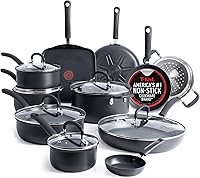
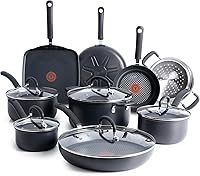
T-fal's Ultimate Hard Anodized set has a titanium nonstick coating, but its product data doesn't specify utensil compatibility. Choose softer tools unless the instructions for your exact set confirm that metal is suitable.
If you already own a pan, check its care guidance before buying new utensils. Our guide to making nonstick pans last longer covers gentle handling and cleaning habits.
What should you do if a nonstick pan is scratched?
Stop using metal tools on a scratched pan and check the maker's advice. A light mark doesn't reveal the pan's full condition, so don't try to scrape, polish, or repair the coating yourself.
If the surface is peeling or flaking, stop cooking with the pan and follow the manufacturer's guidance on replacement. Use soft utensils on other nonstick pans in the meantime.
Avoid stacking pans so their cooking surfaces rub against each other. If stacking is necessary, place a protective layer between them and lift pans rather than dragging them across one another.
How can you choose a pan that fits your utensil habits?
Choose based on the utensil rules you'll follow every day. If you want to cook with metal tools, look for clear model-specific approval; if you prefer a broad choice of softer tools, check the pan's care instructions and use them consistently.
A nonstick pan can be convenient for food release, but utensil compatibility is only one part of the decision. Consider the cookware material, stove fit, and number of pieces you need; choosing a cookware set walks through those tradeoffs.
The simple rule is to use wood, silicone, or nylon unless your pan's instructions clearly allow metal. If metal utensils are part of your routine, favor a specific design whose maker confirms that use.
Frequently asked questions
Can you use metal utensils on nonstick pans?
Usually, it's safer to use wood, silicone, or nylon on a nonstick pan. Metal can scratch or wear the cooking surface, especially if you scrape hard or use a sharp edge.
Check the care instructions for your exact pan, since some designs are made to allow metal utensils.
What happens if you use metal on a nonstick pan?
A metal utensil can scratch, chip, or wear a nonstick surface, depending on the pan's construction and how you use it. Stop using tools that leave visible marks, and check the pan maker's care guidance.
Replace a pan if its surface is peeling or flaking.
Are silicone utensils safe for nonstick cookware?
Silicone utensils are generally a gentler choice for nonstick cookware because they don't have a hard metal edge. Use a utensil in good condition and follow the pan's care instructions.
Wood and nylon are other common options for stirring, turning, and serving.
Which nonstick pans are made for metal utensils?
Some pans are designed for metal utensils, but compatibility depends on the specific model and its care guidance. For example, HexClad says its Hybrid cookware is metal utensil-safe.
Check the exact pan instructions before using metal, even if another pan from the same brand allows it.