Why Do Stainless Steel Pans Warp? How to Avoid It
Stainless steel pans usually warp when uneven or sudden heating makes the metal expand at different rates. Heat the pan gradually, use a burner that fits its base, and let it cool before washing.
On this page (8 sections)
- Why do stainless steel pans warp?
- Can sudden temperature changes warp a pan?
- Can high heat or an oversized burner cause warping?
- Does cookware material or construction make a difference?
- How can you prevent a stainless steel pan from warping?
- Which stainless steel pans may suit careful, even heating?
- When should you replace a warped stainless steel pan?
- How can you avoid warped stainless steel pans?
Stainless steel pans usually warp when uneven or sudden heating makes the metal expand at different rates. Heat the pan gradually, use a burner that fits its base, and let it cool before washing.
A warped pan may rock on the burner, spin when stirred, or sit unevenly on a flat cooktop. Prevention starts with steady heat and patience between cooking and cleanup.
Why do stainless steel pans warp?
A stainless steel pan can warp when different parts of it expand or contract unevenly. A fast temperature change can make one area respond before the rest, stressing the metal and changing the pan's shape.
The bottom is exposed to direct burner heat. If one area gets much hotter than another, the pan may bow or develop a raised center.
A pan's construction also affects how heat moves through it. Fully clad cookware has layers through the body, while some pans have a layered base only.
Learn the difference in what clad cookware means.
Can sudden temperature changes warp a pan?
Yes, a sudden change from hot to cold can stress a pan. For example, putting a hot skillet under cold tap water can cool the bottom quickly while the rest stays hot.
Let the pan cool on a heat-safe surface before washing it. If food is stuck, soak it after the pan has cooled instead of using cold water to force a quick temperature change.
The same principle applies when you move cookware between a hot burner and a cold surface. Set it on a dry, stable, heat-safe spot.
Can high heat or an oversized burner cause warping?
High heat and a burner much wider than the pan can create uneven heating. Use moderate heat to start, then raise it only if the recipe needs more.
On a gas stove, keep flames beneath the pan's base rather than letting them climb the sides. On electric and glass cooktops, choose a cooking zone close to the pan's bottom size.
A small burner under a very wide pan can also create a hot center and cooler edges. If the pan does not heat evenly on your stove, see which pots and pans work on a glass top stove.
Does cookware material or construction make a difference?
Construction affects how heat spreads, but no pan is immune to warping. Clad cookware bonds layers through the body, while a disc-bottom pan concentrates its layered construction at the base.
Stainless cookware often uses an aluminum core to spread heat. Compare how common materials conduct heat in our guide to the best material for pots and pans.
A tri-ply label describes a layered construction, but it doesn't tell you how to handle the pan. Our guide to tri-ply stainless steel cookware sets explains what to look for when comparing options.
Can tri-ply stainless steel pans warp?
Yes, tri-ply pans can still warp if they face severe temperature changes or uneven heat. Their layered body can distribute heat across more of the pan than a layered base alone, but careful use remains important.
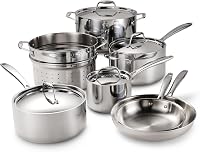
The Cuisinart MultiClad Pro set has a tri-ply body with an aluminum core between stainless steel layers.
Use gradual heat and let each pan cool before washing. That routine helps protect the cookware regardless of its construction.
How can you prevent a stainless steel pan from warping?
Use gradual heat, a well-sized burner, and a cool-down period before washing. These habits limit sharp temperature differences across the pan.
- Start at low or medium heat, then increase it in steps if needed.
- Match the burner or cooking zone to the pan's base.
- Keep gas flames under the base instead of around the sides.
- Avoid heating an empty pan on high for a long time.
- Move a hot pan to a dry, heat-safe surface.
- Let it cool before rinsing or soaking.
The Tramontina Signature Tri-Ply Clad set has an aluminum core for heat distribution and works on induction, gas, electric, and ceramic glass stovetops.
If your current pan rocks or heats unevenly even with sensible use, check whether its base is damaged before relying on it for precise cooking.
What should you do if a pan is already warped?
Stop using a badly warped pan on a glass cooktop, where an uneven base can rock or make poor contact. Inspect it on a flat surface after it has cooled.
Don't try to hammer the pan flat or bend it back by hand. That can damage the base or bonded layers further.
If the cookware is new or the change happened during normal use, contact the maker and ask what care or warranty options apply. Keep the pan's model information handy.
Which stainless steel pans may suit careful, even heating?
Choose a pan whose construction and size suit your stove and cooking needs. A clad body can help distribute heat through the sidewalls, while a smaller set may suit a kitchen with limited storage.
The All-Clad D3 set uses fully bonded tri-ply construction with an aluminum core. It includes a 10 in fry pan, 2 qt saucepan with lid, 3 qt sauté pan with lid, and 6 qt stockpot with lid.
The Calphalon Brushed 3-Ply set has an aluminum core and is compatible with gas, electric, glass, and induction stoves. Calphalon says its Turbo Temp technology heats up to 30% faster than Calphalon Professional Series Stainless Steel cookware.
These sets won't remove the need for careful heating and cooling. Consider the pan size, burner fit, and cookware construction together.
When should you replace a warped stainless steel pan?
Replace a pan if it no longer sits flat, rocks during cooking, or has a visibly damaged base. A stable pan makes contact more evenly and is easier to control.
Minor changes may be hard to judge by eye. Let the cookware cool, set it on a flat counter, and check whether the base rocks or spins.
If only one pan in a set is affected, ask the maker about that piece before replacing everything. For help deciding whether a set suits your kitchen, read what to check before buying pots and pans.
How can you avoid warped stainless steel pans?
To avoid warping, heat stainless steel gradually, match the burner to the pan, and let cookware cool before washing. These simple habits reduce uneven expansion and sudden cooling.
Choose clad cookware if you want layers through the pan body, and choose a set that fits your stove and cooking needs. See aluminum versus stainless steel cookware for a closer look at how those materials differ.
Frequently asked questions
Why do stainless steel pans warp?
Stainless steel pans can warp when rapid or uneven heating creates different temperatures across the metal. The hotter area expands more than the cooler area, which can stress the pan.
Starting on moderate heat, using a suitable burner, and cooling the pan before washing can reduce that stress.
Can high heat warp a stainless steel pan?
High heat can contribute to warping, especially if the pan heats unevenly or is suddenly cooled afterward. Use only the heat needed for the food, and raise it gradually.
A pan that is already hot should not be put under cold water.
Does tri-ply stainless steel prevent warping?
Tri-ply construction adds layers, including an aluminum core, through the pan body. That can help spread heat more evenly, but it does not make cookware immune to damage from sudden temperature changes, excessive heat, or rough handling.
Gradual heating and cooling still matter.
Can a warped stainless steel pan be fixed?
A severely warped pan may not return to its original shape, and trying to hammer or bend it can cause more damage. If it rocks, spins, or no longer sits flat, stop using it on a glass cooktop and check the manufacturer's care or warranty guidance.